discover us for yourself

Discover
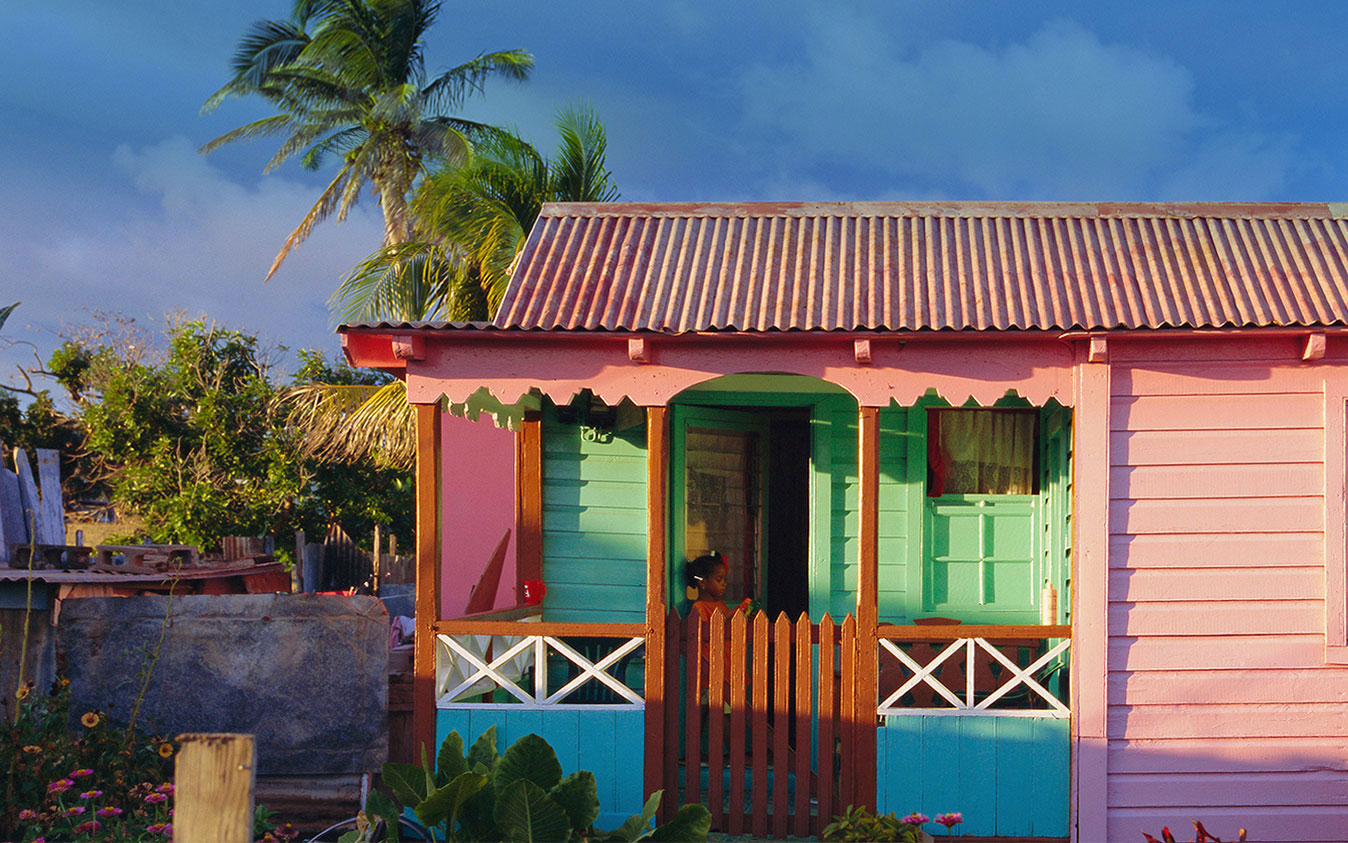
the stories of our proud and friendly people, our charming and colourful villages, our fascinating ruins, our intriguing rain forests,
and our traditions that span centuries.
Our People

Frederick Theophilus Williams
Frederick Theophilus Williams Frederick Theophilus Williams was born in St. Paul’s on the 10th November 1906. His parents were Edmund Williams, a labourer and his wife, Phoebe Ann. As a child he attended the school run by Sophia Jane Thomas and joined the St. Paul’s Parish Choir. At an early age he moved to Basseterre where he became an apprentice in the carpenter’s trade in the workshop of his brother, Charles, who was a building contractor. In...
Read more
Joseph Matthew Sebastian
J Matthew Sebastian J M Sebastian was born at Johnson’s Point in Antigua in 1893. He was the first of five children born to John Sebastian and his wife Sarah. His education lead young Joseph to become a pupil teacher then at the age of fifteen he attended the Mico Training College for Teachers in Jamaica from which he graduated with first class honours. Sebastian returned to his native Antigua but soon after the Anglican Church assigned...
Read more
Ismay Burt
Ismay Burt Ismay Burt was the daughter of Hennrietta Edmeade of Sandown Road, New Town. She was born on the 20th March 1916. She was educated at the Girls’ School where Isa Bardley was headteacher. It was Bradley’s custom, at the time, to pick bright students to become pupil teachers and then advance them to teachers’ training. Young Ismay was chosen for the teaching career. Her home became a meeting place for others following the same...
Read moreOur Places

Co-Cathedral Of The Immaculate Conception
CO-CATHEDRAL OF THE IMMACULATE CONCEPTION is an ornate church constructed out of grey stone and located on the eastern side of Independence Square. In the early years of the French occupation of St. Kitts, the Jesuits had build a Roman Catholic Church and dedicated it to Our Lady. Notre Dame was burned in 1706 during the Anglo-French war and rebuilt later as St. Georges Anglican Church. The catholic congregation in St. Kitts diminished drastically in...
Read more
Bayfords Estate
Bayfords Estate, St. Kitts This estate is in the Parish of St. Peters, in the hills above Basseterre. Its first known owner was Thomas Bridgewater. At the time of the sale of the French lands on St. Kitts, Bridgewater was already in occupation of the estates but had to pay the Commissioners for it in 1726. The plantation then consisted of approximately 84 acres. At the time of bidding Bridgewater had 28 acres under new cane...
Read more
Mount Liamuiga
Mount Liamuiga, St. Kitts Mount Liamuiga is a stratovolcano which forms the western part of Saint Kitts . This type pf volcano has a steep conical shape made up of many layers of lava, pumice and ash. Liamuiga rises to the height of 1156 meters or 3792 feet making it the highest peak in the Leeward Islands and one of the highest in the Caribbean islands. It has a crater lake at...
Read moreOur Events

Good Friday
Good Friday is a quiet day in St. Kitts. Many go to the various church services that commemorate Christ’s Crucifiction . At home, there are hot cross buns for breakfast while lunch consists of cooked saltfish, mackerel, or fresh fish served with a mixture of starchy foods (potatoes, sweet potatoes, breadfruit, green figs, yams, cassava, dasheen, edoes) and greens. In St. Kitts, Good Friday and the rest of the Easter weekend is also the time...
Read more
Flood of 1880
Sunday, 11 January 1880 was described as a fine day with some scattered showers. At about 5.00pm the atmosphere became quite warm compared to the previous few days. Then at about 9.00pm an intense cold set it. There was a light shower which quickly came to an end. By 11.00 pm the rains started falling and continued unabated till 3.00am of 12 January. The night was very dark. The flow of water in the streets was...
Read moreDisasters in Basseterre
Hurricanes Wars were not the only dramatic events to effect the development of Basseterre. Natural disasters played a very significant roll.The 1642 and 1667 hurricanes destroyed all the houses on the island. In 1667 French Governor Laurent reported I hold myself obliged to inform you that this island is in the most deplorable state that can be imagined and that the inhabitants could not have suffered a greater loss, or been more unfortunate except they had...
Read more"In this bright future, you can't forget your past"
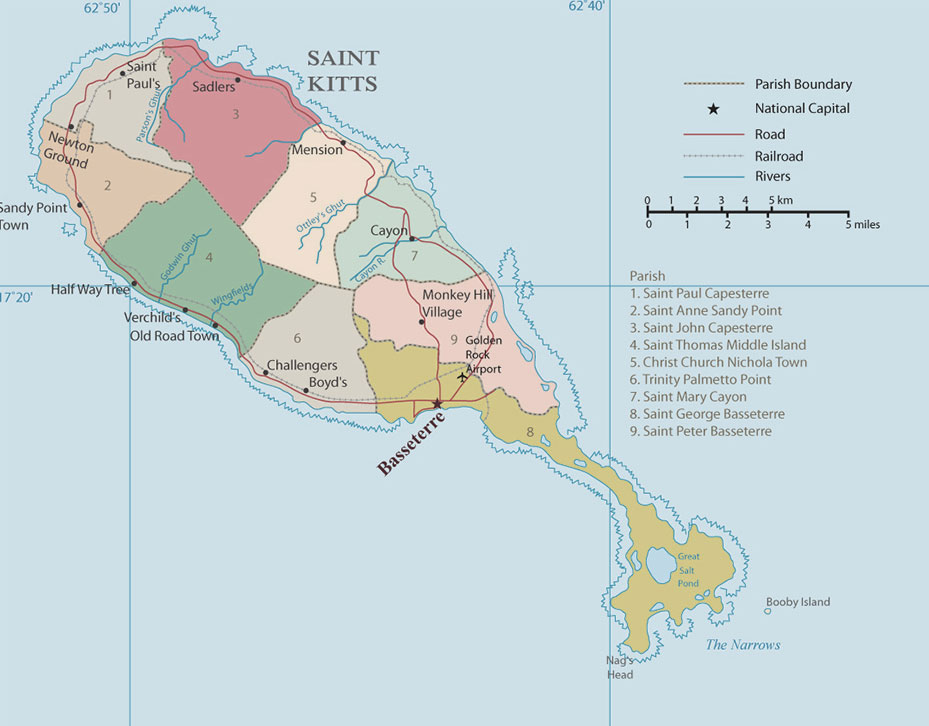
Interactive Map
Move your mouse over the red map markers to view information about each particular location. To read more, click the marker for further information. Locations may also be selected using the adjacent listbox.

Government Headquarters
Church Street
Basseterre
St. Kitts, West Indies
Tel: 869-465-2521 ext.1208
Website: www.nationalarchives.gov.kn

19 St. Clair Avenue
Port-of-Spain
Trinidad and Tobago
© Copyright 2018 National Archives, St. Kitts Nevis. All rights reserved.
Web Development: Genesis